

SAFETY AND SOURCING GUIDE
Is shilajit resin safe? What can be checked and what cannot
Is shilajit resin safe? Nobody can answer that for a whole category, because safety depends on the pot in your hand and on you. This guide covers sourcing, heavy-metal contamination risk, why a batch report matters, who should ask first, and what official pages say about status.
Not medical advice. Adults 18+ only.
Himalayan shilajit resin
30 g pot
Packs of 1, 3, 5 or 10 pots
Directions printed on the pot
Adults 18+ only
Himalayan shilajit resin
30 g pot
Packs of 1, 3, 5 or 10 pots
Directions printed on the pot
Adults 18+ only
Is shilajit resin safe? The short answer
It depends on what is in the pot and who takes it. The safety research is thin, the raw material varies from batch to batch, and heavy metals are a documented quality concern. A supplement is not a medicine, and nothing here says shilajit is safe for you.
- Evidence: a 2014 review called shilajit's safety well documented in animal and human studies, but noted few well-controlled human trials. Cleveland Clinic calls the evidence weak.
- Main quality risk: raw shilajit can contain toxic metals and microbes. In one 2024 review, most reported metal levels were under the limits it cites and a few were over.
- Oversight: the US FDA does not approve supplements before sale. In the EU, safety is the responsibility of the business placing the product on the market.
- Our pot: no batch report is published on this site, and we make no testing claim.
For reported effects such as nausea and headaches, see our guide to shilajit resin side effects. This page is about sourcing, contamination and oversight.
OUR SHILAJIT RESIN
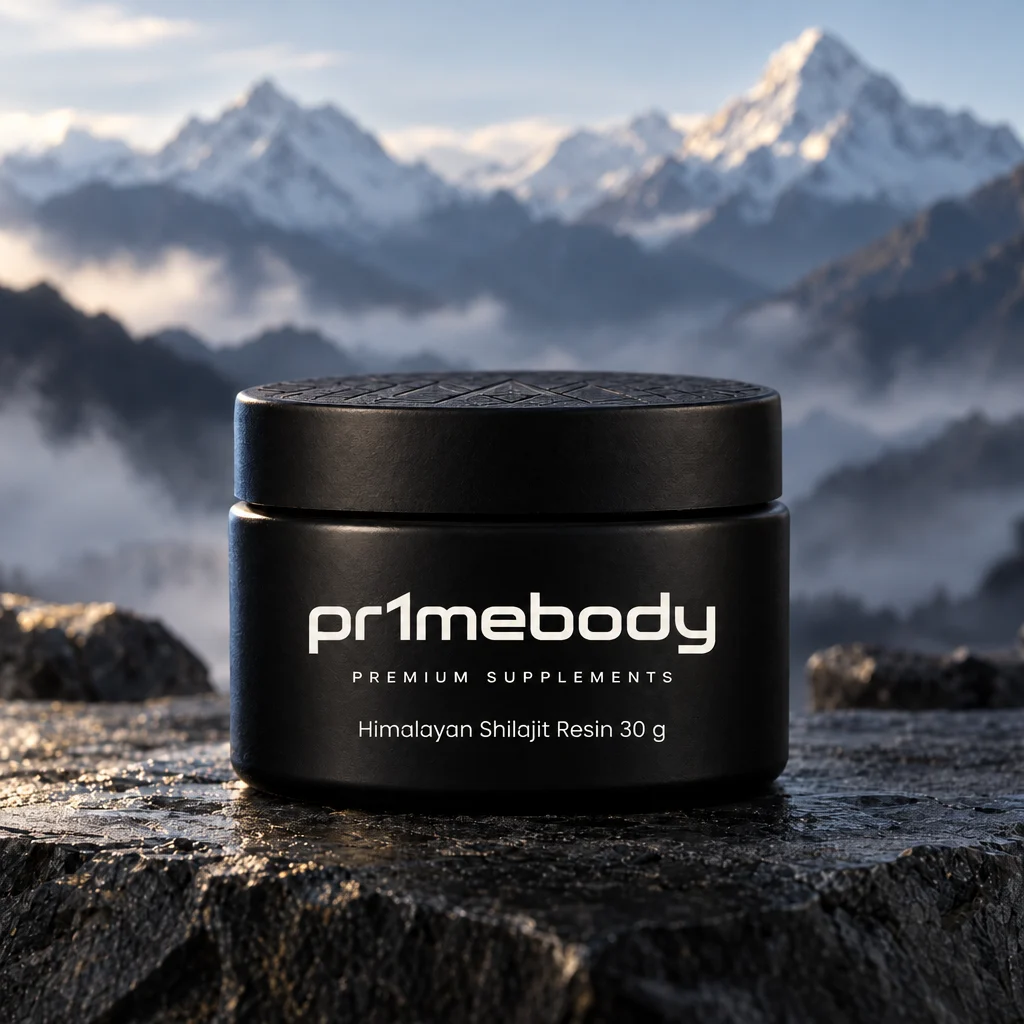
Himalayan shilajit resin, 30 g pot
A shilajit resin food supplement in a 30 g pot. We publish no batch report for it on this site, and our guides explain what to ask any seller.
- 30 g resin pot
- Packs of 1, 3, 5 or 10 pots
- Follow the directions printed on the pot
From
$31
1 pot
A first pot to try.
$31
3 pots
$20.67 per pot
Buy 2, get 1 free
$62
−33%
5 pots
$18.60 per pot
Buy 3, get 2 free
$93
−40%
Best value
10 pots
$15.50 per pot
Buy 5, get 5 free
$155
−50%
See the full product page · Read first: what is shilajit
Prices in US dollars as of 12 Oct 2026. Free tracked shipping and a 30-day money-back guarantee. Checkout opens on satiovex.com, the store run by Xinop LLC, which also sells pr1mebody products; the item may appear there under the Satiovex name.
Who checks supplements before they are sold?
Start with oversight: a supplement is not approved the way a medicine is. The US FDA says it is not authorized to approve dietary supplements for safety and effectiveness before they are marketed, and advises talking to a doctor, pharmacist or other healthcare professional before using one. The NIH Office of Dietary Supplements adds that companies must have evidence their products are safe, but unless a product contains a new dietary ingredient (one introduced since 15 October 1994) they need not give FDA that evidence before marketing.
In the EU, EFSA says food supplements are regulated as foods and that responsibility for their safety lies with the food business operator placing the product on the market. It adds that ingredients other than vitamins and minerals, such as botanicals, are governed by other rules, national or EU-wide, including novel food rules.
The ODS also says independent organisations offer quality testing, and products that pass may carry a seal showing they were properly manufactured, contain the listed ingredients and lack harmful levels of contaminants. It stresses that seals do not guarantee a product is safe or effective. We hold no seal and claim none.
SHILAJIT
The 2014 review and Cleveland Clinic both lean cautiously reassuring about shilajit taken as directed, and both say the data are thin.
THE EVIDENCE
What does the research say about safety?
Four sources speak to safety. All are thin on human data, and none covers a pot you can buy today.
Source
What it says about safety
Limit
Source
Safety and efficacy review, 2014
What it says about safety
Safety is documented in animal and human studies. Few well-controlled human studies exist. Standardised products are needed.
Limit
Abstract only
Source
Cleveland Clinic, 2025
What it says about safety
The few clinical trials suggest shilajit is relatively safe taken as directed. Batch variability makes quality and a safe dosage hard to guarantee.
Limit
Clinic explainer
Source
Heavy-metals review, 2024
What it says about safety
Most reported levels were under cited limits and a few were over. Use without knowing the levels is not safe.
Limit
Abstract only
Source
ConsumerLab test, 2024
What it says about safety
Lead, cadmium, arsenic and mercury were below levels of concern in all eight products at one serving a day.
Limit
Eight products
The 2014 review and Cleveland Clinic both lean cautiously reassuring about shilajit taken as directed, and both say the data are thin. So safety is really two questions: is the substance tolerable for you, and is this pot free of what should not be in it?
Why two pots of shilajit can differ: sourcing and variability
A European Commission consultation document describes mumijo, another name for shilajit, as not uniquely defined in origin or composition. Cleveland Clinic adds that batches differ with location, plant life and temperature, which makes quality and a safe dosage hard to guarantee. Its reviewer says safety depends on how the shilajit is prepared, and that in raw form it is likely to carry impurities such as heavy metals and microbes.
Cleveland Clinic also cites a 2025 study in which some shilajit supplements had higher thallium than the raw material. That suggests a finished product needs its own check.
Origin wording does not settle it. A country on a pot is the seller's statement, and a mountain range in a product name is only a name. "Himalayan" is part of our product name. The pot's own wording is "Product of Nepal", which we quote and have not verified.
What do we know about heavy metals?
Is shilajit resin safe from contamination? Heavy metals are the best-documented concern. Cleveland Clinic cites a 2024 review finding that raw shilajit often contains aluminium, arsenic, cadmium, chromium, mercury, thallium and lead, plus fungus.
The World Health Organization says no level of lead exposure is known to be without harmful effects, and lists some traditional medicines among the sources. The NIH's NCCIH says some Ayurvedic preparations may contain lead, mercury or arsenic in amounts that can be toxic. Neither statement is about shilajit specifically, but they show why contamination in a traditional mineral product is taken seriously.
The shilajit-specific evidence is more balanced. A 2024 review in Biological Trace Element Research reports that metal levels in the studies it covered were mostly below the limits it cites for herbal drugs, with a few studies over them. It concludes that using shilajit without knowing the permissible levels is not safe. The limits it cites:
Metal
Limit cited for herbal drugs (ppm)
Metal
Cadmium
Limit cited for herbal drugs (ppm)
0.20 and 0.30
Metal
Mercury
Limit cited for herbal drugs (ppm)
1
Metal
Arsenic
Limit cited for herbal drugs (ppm)
10
Metal
Lead
Limit cited for herbal drugs (ppm)
10
We have not checked those figures against the WHO or FDA documents, so treat them as the review authors' citation. A limit is a concentration. What reaches you depends on how much you take, and the ConsumerLab all-clear for eight products assumed one serving a day. That is encouraging for those eight and says nothing about your pot.
What is a batch report, and why ask for one?
A batch report, usually called a certificate of analysis, is a laboratory document for one production lot. Cleveland Clinic advises choosing products tested by an independent laboratory, with a certificate of analysis, and says third-party testing is not foolproof but is the best way to confirm a product lacks significant metal or microbial contamination.
It turns a safety claim into something you can read. A label word such as tested says nothing about which lab, which lot or what was found. When you ask for a report, check that:
- the lot number on the report matches the lot number on your pot;
- it names the laboratory and the date of analysis;
- it gives a numeric result and a unit for each metal, including lead, cadmium, arsenic and mercury, not just a pass;
- it states the limit each result was compared against, and who set it;
- it covers microbes if the seller says it does, since Cleveland Clinic names microbes alongside metals.
Is shilajit resin safe without a report? Nobody can say, though a missing report does not prove contamination, and a report does not make a product safe for you. It changes what you know, and a seller's answer, or silence, is information too. Hold every seller to this, ours included.
SHILAJIT
Even a clean batch is not right for everyone, so the answer for you depends on your health and your medicines.
Who should ask a doctor or pharmacist first?
Even a clean batch is not right for everyone, so the answer for you depends on your health and your medicines. The ODS says side effects are most likely if you take supplements at high doses, take them instead of prescribed medicines, or take many different ones. It adds that supplements can interact with some medicines, and that you should tell your providers about every supplement, including before surgery.
- Pregnant, breastfeeding or trying to conceive. The NHS says not all natural remedies are safe in pregnancy, some products may contain substances such as lead, and herbal remedies are not advised if you are trying to get pregnant. Cleveland Clinic lists this group among those to avoid shilajit or check with a provider first.
- Under 18, or buying for a child. Cleveland Clinic says it is best not to give shilajit to children, because there is little safety research. Our pot is for adults only.
- Taking medicines or living with a condition. Cleveland Clinic lists heart, blood pressure, clotting, diabetes, liver, kidney, overactive immune and iron-absorption conditions.
Questions for your pharmacist
Does anything I take change how I should use this? Does the pot's ingredient list conflict with my medicines or conditions? Is there a reason to wait?
The ODS also says a supplement's safety depends on its chemical makeup, how it is prepared and the amount taken, and that the word natural does not always mean safe.
REGULATORY STATUS
What do official pages say about its status?
Rules differ by place. We report status only from official pages we read; where we found nothing, the table says so.
Place
Official source we read
What it says
Place
EU
Official source we read
European Commission Novel Food Status Catalogue, entry Asphaltum punjabianum (common names Mumijo, Shilajit), latest update 21 March 2025
What it says
Not novel in food supplements: Member State information shows use in them before 15 May 1997. Other food uses may be novel and need authorisation. Other legislation may restrict marketing, so check your national authority.
Place
US
Official source we read
FDA consumer page (current as of 21 October 2022) and ODS fact sheet (updated 4 January 2023)
What it says
FDA does not approve supplements for safety before marketing. Companies are responsible for safety evidence and truthful labels. We found nothing from FDA on shilajit itself.
Place
UK, Canada, Australia
Official source we read
None
What it says
We found no official source on shilajit for these places, so we say nothing about their rules.
Two cautions. The Commission calls the catalogue a non-binding, non-exhaustive tool, and Member States may restrict marketing under their own laws. And the entry concerns pre-market authorisation, not contamination, so it cannot tell you whether any pot is free of metals.
OUR POT
Our own pot: what we can and cannot say
We sell the pr1mebody Himalayan Shilajit Resin in a 30 g pot, so weigh this page accordingly. We cannot show you that our pot is free of contaminants, because no batch report is published on this site and we make no testing or certification claim.
Our listing gives the pot size, packs of 1, 3, 5 or 10 pots, and the instruction to follow the directions on the pot and not exceed the serving. It says the product is for adults, and that anyone pregnant, breastfeeding, on medication or with a medical condition should ask a doctor or pharmacist first. Its text prints no ingredient list or serving amount, so read the pot.
For lot-specific documents before you buy, ask through our contact page, and weigh the answer, or its absence.
Eight checks before and after the pot arrives
Work through these in order:
- Ask who it is not for. Pregnancy, breastfeeding, trying to conceive, under-18s, medicines and conditions all mean asking a professional first.
- Read the label before you pay. Ingredients, serving, lot number, best-before date, seller name and address.
- Ask for a batch report and check it against the five points above.
- Check the lot on arrival. The lot and best-before date on the pot should match what you were told.
- Use the printed serving and no more. Our listing says not to exceed it. See how to take shilajit resin.
- Handle it cleanly. Clean, dry utensil, tight lid, away from heat and direct sunlight, out of reach of children.
- Stop if you feel unwell, and seek medical care if symptoms are severe or you are unsure.
- Report problems. The ODS says you can report a bad reaction to FDA on 800-FDA-1088 or through an online form, and should also tell the manufacturer using the label's contact details.
Do not try to treat a reaction with another supplement.
Safety questions people ask
Is shilajit resin safe to take?
It depends on the pot and the person. Cleveland Clinic says the few clinical trials suggest shilajit is relatively safe taken as directed, but quality is hard to guarantee because batches vary.
Is it safe to take long term?
No source we read gives long-term safety data or a safe daily amount. Follow the label, do not exceed the serving, and ask a professional about long-term use.
Does "Himalayan" on the label make it safer?
The word Himalayan is a name or an origin statement, and neither shows safety. A batch report for the lot tells you more.
Which brand is the safest?
We cannot rank brands and no source we read does. A safer approach is a process: a full label, a lot-specific batch report, and professional advice if you are in a flagged group.
Is it safe for children?
We do not recommend it. Cleveland Clinic says it is best not to give shilajit to children because safety research is limited. Our pot is for adults 18+ only.
What about pregnancy and breastfeeding?
We found no safety data. Cleveland Clinic lists both groups among those to avoid shilajit or check with a provider first.
What if I have diabetes or kidney disease?
We found no evidence either way. Cleveland Clinic lists people with diabetes, and people with liver or kidney disease, among those who should check with a provider first.
Does shilajit interact with medication?
The sources we read give no interaction list. Cleveland Clinic flags blood thinners, diabetes and blood pressure for providers to review. Show the label to a pharmacist.
Can you overdose on shilajit?
We found no source giving an overdose level or an upper limit. Follow the printed serving, do not exceed it, and seek medical care if you feel unwell.
How can I tell if a shilajit resin is legitimate?
Documents answer that better than adjectives. We found no source that validates an at-home test. Check the label and ask for a lot-specific batch report.
Is there a lab report for your shilajit resin?
No. None is published on this site and we make no testing claim.
Evidence and what we could not source
Every answer on this page comes from the sources listed below. We read those sources; where we read only an abstract, the text says so. Our editorial policy explains how pages are written and corrected.
- No source we read gives an overdose level, a safe daily amount or long-term safety data for shilajit resin.
- We found no official source on shilajit for the UK, Canada or Australia, and none from the FDA about shilajit itself.
- The metal limits are as cited by the 2024 review. We did not open the WHO or FDA originals.
- The NCCIH page (January 2019) covers Ayurvedic preparations in general, and the WHO page names traditional medicines, not shilajit.
- We read abstracts, not full texts, of the 2014 and 2024 reviews. This page has not yet been reviewed by a licensed professional.
Sources
3. Stohs, Safety and efficacy of shilajit, Phytotherapy Research 2014
4. ConsumerLab news release, 26 September 2024: shilajit supplements tested
5. NIH Office of Dietary Supplements: What You Need to Know (updated 4 January 2023)
6. US FDA: information for consumers on using dietary supplements (current as of 21 October 2022)
7. EFSA: food supplements topic page
9. European Commission: about the Novel Food Catalogue
10. European Commission: novel food status consultation request, mumijo (shilajit), 24 September 2020
11. World Health Organization: Lead poisoning and health (fact sheet, 10 June 2026)
12. NIH NCCIH: Ayurvedic Medicine, In Depth (last updated January 2019)
13. NHS: Medicines in pregnancy (page last reviewed 5 September 2022)
Keep reading
What is shilajit?
The hub guide: what it is, what research exists, and a label checklist.
Read the guide →
How to take shilajit resin
Label-first steps, and what no source can tell you.
Read the guide →
Shilajit resin vs capsules vs gummies
Seven differences in dose visibility, labels, price and storage.
Read the guide →
KEEP READING
Related reading on shilajit
What Is Shilajit? Evidence, Heavy Metals and Labels
What is shilajit? A plain guide to what the substance is, what research exists, the heavy-metal question and what a pot's label should show.
Read the guide →
How to Take Shilajit Resin
How to take shilajit resin: follow the printed directions and stay within the serving. We give no doses of our own and say who should ask a doctor first.
Read the guide →
Shilajit Resin vs Capsules vs Gummies
Shilajit resin vs capsules vs gummies: how dose visibility, label reading, price per serving and storage differ. No format is claimed to work better.
Read the guide →
Product: Himalayan Shilajit Resin, 30 g Pot
Himalayan shilajit resin in a 30 g pot: what the label states and leaves out, who should skip it, and the quality questions to ask any seller first.
See the product →
Not sure it suits you? Ask first
Ask us about the label facts of the 30 g Himalayan Shilajit Resin pot, or read the guide again before you decide.
Food supplement, not a medicine. If you are pregnant, breastfeeding, taking medication or have a medical condition, speak to your doctor before using shilajit.
