

SHILAJIT FORMAT GUIDE
Shilajit resin vs capsules vs gummies: what actually changes
Shilajit resin vs capsules vs gummies is mostly a question about labels, not magic. This guide compares dose visibility, label reading, price per serving maths and storage, and makes no efficacy claims, because no source we read ranks the formats.
Not medical advice. Adults 18+ only.
Himalayan shilajit resin
30 g pot
Packs of 1, 3, 5 or 10 pots
Directions printed on the pot
Adults 18+ only
Himalayan shilajit resin
30 g pot
Packs of 1, 3, 5 or 10 pots
Directions printed on the pot
Adults 18+ only
Shilajit resin vs capsules vs gummies: the short answer
The honest answer to shilajit resin vs capsules vs gummies is that no format has been shown to be better, and no source we read compared them head to head. What changes is how much of the measuring and checking lands on you.
- Dose visibility: a resin makes you take out your own serving, so the label has to state it. Capsules and gummies are counted units, but the amount of shilajit per unit can still be hidden.
- Label reading: every format needs the same checks: serving, shilajit per serving, other ingredients, lot number, best-before date and seller.
- Price per serving: divide the pack price by servings, then check each serving holds a comparable amount of shilajit.
- Storage: for our pot, a clean dry utensil, a tight lid and shade from heat and sun. For other formats, follow that label.
- What does not change: in every format, shilajit varies between batches and contamination is a quality question.
Our own product is a resin, so weigh this page accordingly. We sell the Himalayan Shilajit Resin in a 30 g pot, and we do not sell shilajit capsules or gummies. For background, read what is shilajit.
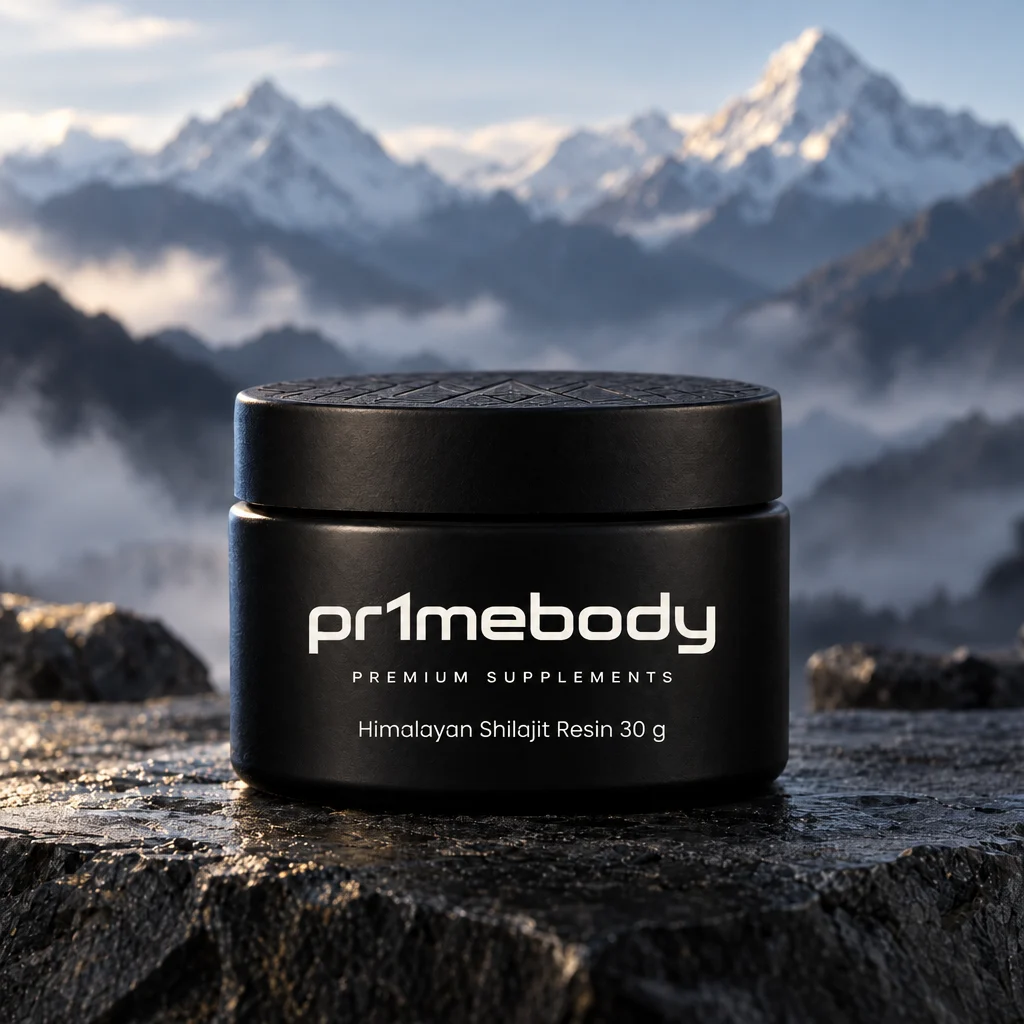
OUR SHILAJIT RESIN
Himalayan shilajit resin, 30 g pot
A shilajit resin food supplement in a 30 g pot. We publish no batch report for it on this site, and our guides explain what to ask any seller.
- 30 g resin pot
- Packs of 1, 3, 5 or 10 pots
- Follow the directions printed on the pot
From
$31
1 pot
A first pot to try.
$31
3 pots
$20.67 per pot
Buy 2, get 1 free
$62
−33%
5 pots
$18.60 per pot
Buy 3, get 2 free
$93
−40%
Best value
10 pots
$15.50 per pot
Buy 5, get 5 free
$155
−50%
See the full product page · Read first: what is shilajit
Prices in US dollars as of 12 Oct 2026. Free tracked shipping and a 30-day money-back guarantee. Checkout opens on satiovex.com, the store run by Xinop LLC, which also sells pr1mebody products; the item may appear there under the Satiovex name.
AT A GLANCE
Seven differences, side by side
These differences come from how each format is made and labelled, not from any proven effect.
Difference
Resin (pot)
Capsules or tablets
Gummies
Difference
Who measures
Resin (pot)
You do, with a clean, dry utensil.
Capsules or tablets
Counted units.
Gummies
Counted units.
Difference
What you swallow
Resin (pot)
Shilajit itself, a black, sticky substance per Cleveland Clinic.
Capsules or tablets
In the ConsumerLab test, extracts.
Gummies
Shilajit in a gummy, sometimes combined with other ingredients.
Difference
Where the amount shows
Resin (pot)
On the pot. Our listing gives 30 g (30,000 mg) and sends you to the pot for the serving.
Capsules or tablets
Supplement Facts panel, if shilajit is listed separately.
Gummies
Same panel. Check for a blend.
Difference
Other ingredients
Resin (pot)
Check whether it is shilajit alone.
Capsules or tablets
Check fillers, binders, flavourings.
Gummies
Check the same list.
Difference
Price maths
Resin (pot)
Pot price divided by servings per pot.
Capsules or tablets
Bottle price divided by servings.
Gummies
Jar price divided by servings.
Difference
Storage
Resin (pot)
Clean, dry utensil, tight lid, away from heat and sun.
Capsules or tablets
Follow the label.
Gummies
Follow the label.
Difference
Closest evidence
Resin (pot)
ConsumerLab: far less fulvic acid than capsule extracts.
Capsules or tablets
Same test: extracts were more concentrated.
Gummies
A JAMA study of melatonin gummies, not shilajit.
Read the table as a map of questions, not a ranking. A gap is a gap, not a polite way of saying one format is worse.
What is inside the pot, the capsule or the gummy?
Cleveland Clinic describes shilajit as a black, sticky substance that forms over centuries from decomposed plants in rock crevices. It says shilajit is sold as liquids, powders, gummies, pills and tablets, and is sometimes combined with other ingredients. A European Commission document on mumijo, another name for shilajit, says it is not uniquely defined in origin or composition.
That matters for the choice. If the starting material is not uniquely defined, the format is a wrapper around something that already varies. The 2014 review in Phytotherapy Research calls for studies using standardised products, which suggests standardisation cannot be assumed from a label.
The closest thing to a format comparison is a 2024 ConsumerLab test of eight products, including capsules and tablets, gummies and resins. Fulvic acid ranged from about 6.9 mg to 2,206 mg per serving. The resins contained far less fulvic acid than the extracts in capsules and pills, and fulvic acid amounts were typically not printed on labels.
Two cautions. Fulvic acid is a marker ConsumerLab measured, not a measure of benefit, and eight products is a small sample. The test shows that products and formats differ a lot. It cannot name a winner, and neither can we.
SHILAJIT
The NIH Office of Dietary Supplements says a Supplement Facts label lists the active ingredients, the amount per serving and the other ingredients, such as fillers, binders and flavourings.
Dose visibility: can you see how much shilajit you get?
The NIH Office of Dietary Supplements says a Supplement Facts label lists the active ingredients, the amount per serving and the other ingredients, such as fillers, binders and flavourings. The manufacturer suggests the serving size. That is the baseline for capsules and gummies, and the starting point for any comparison.
A resin changes the picture. You take out your own amount, so there is no counted unit to hide behind and the label has to say what one serving is. Our product page lists the pot as 30 g, which is 30,000 mg of resin, and says to follow the directions printed on the pot. Its text states no serving amount, so read the pot. We will not guess one.
Capsules and gummies can hide the number differently. FDA's labelling guide says a proprietary blend must be identified as such, with the total of the ingredients in the blend on one line and the ingredients listed under it in descending order of predominance. The guide is dated 2005 and non-binding, but the logic holds: a blend line totals everything in the blend, which is not the amount of shilajit. If shilajit sits inside a blend, ask what share it is.
Then there is whether the printed number is true. A 2023 JAMA research letter measured melatonin in 25 gummy products and found only 3 within 10% of the declared amount, with measured amounts from 74% to 347% of the label. It was about melatonin, not shilajit, and it tested one sample of each brand and only gummies, so its authors say it is not known whether the results apply to tablets or capsules.
Take it as a reminder that a printed number is a declaration, not a measurement, and not as proof that gummies are worse than capsules. In any format, a batch report for your lot is the only document that closes the gap.
A label checklist for any pack
Whatever the format, hold the pack to one list. It draws on the ODS description of a supplement label and the checks on our own product page. The label should show:
- Serving size and servings per pack. You need both for any price comparison.
- The amount of shilajit per serving. In milligrams, and clear about whether it means resin, extract or something else.
- Blend or no blend. If shilajit is inside a proprietary blend, only the total may be printed.
- The other-ingredients list. Fillers, binders, flavourings and anything you want to avoid.
- Lot number and best-before date. They tie your pack to one production run, so you and the seller can refer to the same product.
- An origin written plainly. Read it as the seller's statement. A place in a product name is only a name.
- Seller name and postal address. A seller you cannot identify is a reason to pause.
- Age and pregnancy notices. An age limit and a line for people who are pregnant, breastfeeding or on medication.
One more item sits outside the label: a batch report for your lot. Cleveland Clinic advises choosing products tested by an independent laboratory, with a certificate of analysis, while noting that third-party testing is not foolproof. We cover why in is shilajit resin safe.
How to compare price per serving
The sum uses one method in every format: work out the servings in the pack, then divide the price.
- Count the units in the pack: capsules, gummies, or milligrams of resin.
- Divide by the units in one serving, from the label. That gives servings per pack.
- Divide the pack price by servings per pack. That is the price per serving.
- Divide again by the milligrams of shilajit in one serving, if the label gives them. Only this step makes formats comparable.
Format
Servings per pack
Price per serving
Format
Capsules: C per bottle, N per serving, bottle price P
Servings per pack
C ÷ N
Price per serving
P ÷ (C ÷ N)
Format
Gummies: G per jar, M per serving, jar price P
Servings per pack
G ÷ M
Price per serving
P ÷ (G ÷ M)
Format
Resin: 30,000 mg per pot, a serving of S mg from the label, pot price P
Servings per pack
30,000 ÷ S
Price per serving
P ÷ (30,000 ÷ S)
The letters stand for the numbers printed on any pack, so you can use the same method on any product. The point is the last step: two servings that cost the same may hold very different amounts of shilajit, and a milligram of resin is not interchangeable with a milligram of extract.
ConsumerLab reported that extracts are more concentrated and less expensive than resins per equivalent amount of fulvic acid. We cannot give you an exchange rate between formats, and nobody should who has not tested your product.
Pack size is the other lever. Our packs hold 30 g, 90 g, 150 g or 300 g of resin (30,000 mg to 300,000 mg), as the product page states. A bigger pack only lowers the cost per serving if you finish it. To see how long a pot lasts, divide its milligrams by the daily amount printed on the label. If the label gives none, ask the seller before you buy more.
SHILAJIT
For our resin pot, the product page gives handling tips.
Storage and handling: where a pot differs
For our resin pot, the product page gives handling tips. Use a clean, dry utensil each time. Close the lid tightly after use. Keep the pot away from heat and direct sunlight, and out of reach of children. If the label says anything different, follow the label.
Those tips follow from the format. A pot is dipped into again and again, so the utensil matters, while a capsule or gummy is a counted unit that needs none. That is a practical difference, not a health finding.
For capsules and gummies, we found no source on how storage affects shilajit products, so we will not invent rules. Read the storage line and best-before date on the pack. People also search for what to do when a resin goes hard or soft. We found no authoritative guidance, so if the texture changes in a way that worries you, stop using it and contact the seller.
Which format suits which buyer? Practical, not medical
Once you accept that no format is proven better, the shilajit resin vs capsules vs gummies choice comes down to what you can verify and what you will actually do.
- You want counted units: capsules or gummies skip the measuring step. Make sure the label states the shilajit per serving.
- You are happy to measure: a resin suits you if the pot prints a clear serving and you will use a clean, dry utensil each time.
- You are weighing price: use the per-serving sum above, with shilajit per serving as the last check.
- You are pregnant, breastfeeding, on medicines or managing a condition: the format does not change the advice. Ask a doctor or pharmacist first, then read is shilajit resin safe.
None of this says one format suits any health goal better than another. We make no health claims for any of them.
OUR POT
Where our resin fits
pr1mebody sells one shilajit product: the Himalayan Shilajit Resin in a 30 g pot, in packs of 1, 3, 5 or 10 pots. The listing says to follow the directions printed on the pot and not to exceed the recommended serving. It is for adults only.
No batch report is published on this site, and we make no testing or certification claim. The pot says "Product of Nepal", which is the packaging's wording and not something we have verified. The listing text gives no ingredient list or serving amount, so read the pot and run the checklist above on it.
We do not sell shilajit capsules or gummies, and we are not saying a resin is better. For lot-specific documents before you buy, ask through our contact page.
Questions about the formats
Is resin better than capsules or gummies?
We cannot say, and no source we read compares them for any outcome. In its test of eight products, ConsumerLab found resins had far less fulvic acid than capsule extracts, but fulvic acid is a lab marker, not a measure of benefit. A resin makes you measure your own serving. Gummies are counted units, but the printed number is still a declaration. Compare labels, not formats.
What is the difference between shilajit resin and shilajit extract?
ConsumerLab describes the capsule and pill products in its test as extracts, which it says are more concentrated than resins. In price-per-serving sums, do not treat a milligram of resin and a milligram of extract as equal.
How do I work out the price per serving of shilajit resin?
Servings per pot equal the pot size in milligrams divided by the serving in milligrams printed on the label. Then divide the pot price by servings. Our 30 g pot is 30,000 mg, so the same sum shows how long it lasts.
How do I store shilajit resin, and does it expire?
Our listing says to use a clean, dry utensil, close the lid tightly and keep the pot away from heat and direct sunlight. Check the best-before date and lot number on the pot. We found no source on shelf life, so we state none.
Is there a lab report for shilajit resin?
Not for ours. No batch report is published on this site and we make no testing claim, whatever the format. Ask through our contact page if you want lot-specific documents.
Do you sell shilajit capsules or gummies?
No. Our shilajit product is a resin in a 30 g pot.
Evidence and what we could not source
Health and dose statements in this shilajit resin vs capsules vs gummies guide come from the sources listed below. We read those sources; where we read only an abstract, the text says so. Our editorial policy explains how pages are written and corrected.
- No study we found compared the three formats for any outcome, so there is no sourced winner.
- We found no shilajit-specific source on storing capsules or gummies.
- The gummy accuracy study is about melatonin, not shilajit, and tested only gummies.
- The FDA labelling guide is dated 2005 and non-binding. Check current rules for the Supplement Facts layout.
- Our listing text gives no serving amount or ingredient list, so we give none.
- We read only the abstract of the 2014 review.
- This page has not yet been reviewed by a licensed professional.
Keep reading
What is shilajit?
The hub guide: what it is, what research exists, and a label checklist.
Read the guide →
Is shilajit resin safe?
Sourcing, heavy metals, batch reports and who should ask first.
Read the guide →
How to take shilajit resin
Label-first steps, and what no source can tell you.
Read the guide →
KEEP READING
Related reading on shilajit
What Is Shilajit? Evidence, Heavy Metals and Labels
What is shilajit? A plain guide to what the substance is, what research exists, the heavy-metal question and what a pot's label should show.
Read the guide →
How to Take Shilajit Resin
How to take shilajit resin: follow the printed directions and stay within the serving. We give no doses of our own and say who should ask a doctor first.
Read the guide →
Is Shilajit Resin Safe? Metals, Sourcing and Oversight
Is shilajit resin safe? A look at heavy metals, batch reports, what official EU and US pages say, and who should check with a doctor or pharmacist first.
Read the guide →
Product: Himalayan Shilajit Resin, 30 g Pot
Himalayan shilajit resin in a 30 g pot: what the label states and leaves out, who should skip it, and the quality questions to ask any seller first.
See the product →
Still deciding between the formats?
Our shilajit product is a resin in a 30 g pot. Read the label facts and cautions before you buy.
Food supplement, not a medicine. If you are pregnant, breastfeeding, taking medication or have a medical condition, speak to your doctor before using shilajit.
