
SHILAJIT RESIN GUIDE
What is shilajit? A plain guide before you buy a pot
What is shilajit? It is a dark, sticky mineral-rich substance that forms in mountain rock and is sold as a resin, powder, capsule or gummy. This guide covers what it is, what research exists, what a label should show, and what no seller can promise.
Food supplement for adults 18+. Not a medicine. No batch report is published on this site.
Himalayan shilajit resin
30 g pot
Packs of 1, 3, 5 or 10 pots
Directions printed on the pot
Adults 18+ only
Himalayan shilajit resin
30 g pot
Packs of 1, 3, 5 or 10 pots
Directions printed on the pot
Adults 18+ only
30
grams of resin in each pot
4
pack sizes: 1, 3, 5 or 10 pots
18+
adults only
The facts we can state about the pot, in one place. We do not publish a batch report for this product, and the guide below explains why that matters.
Shilajit Resin label facts
Format
Resin
Pot size
30 g
Pack sizes
1, 3, 5 or 10 pots
Directions
As printed on the pot
For
Adults 18+
Only facts from the product label and listing are shown.
THE SHORT ANSWER
What is shilajit, in plain words?
A short answer first, details after.
Cleveland Clinic describes shilajit as a black, sticky substance that forms over centuries from decomposed plants in rock crevices, with a long history in Ayurvedic medicine. So when people ask what is shilajit, the first honest answer is that it is a material derived from minerals and plants, not a single ingredient with one fixed recipe.
A European Commission document on mumijo, another name for shilajit, says it is not uniquely defined in origin or in composition. That matters, because it means two pots sold under the same word can differ.
The research on shilajit and what it does is thin. A 2011 review of traditional use concluded that shilajit has a long history of use but that its bioactivity lacks substantial evidence. Nothing on this page says shilajit treats or fixes anything.
What this page will and will not do
It will explain what the material is, how to judge a label, and where the real questions sit (sourcing and heavy metals). It will not promise results, because we cannot back them up.
What is shilajit made of and where does it come from?
The European Commission consultation text calls mumijo a complex product of organic and mineral origin that forms in mountainous regions through geological and biological processes. It names humic and fulvic acids, dibenzo-alpha-pyrones and a range of minerals among its components.
The same document describes it as often dark brown and resinous with a characteristic smell. That is a description of the material in general, not a specification for any one brand.
Two points follow. First, its chemistry depends on where it was collected and how it was processed. Second, a mountain name on a pot is a name, not proof of origin.
Does the word Himalayan on a label mean anything?
Not much by itself. The product page for our pot quotes the pot's own wording, "Product of Nepal", and says plainly that this is the packaging's statement, not a verified finding. We treat the word Himalayan in the product name as a name, and we do not offer a sourcing audit we do not have.
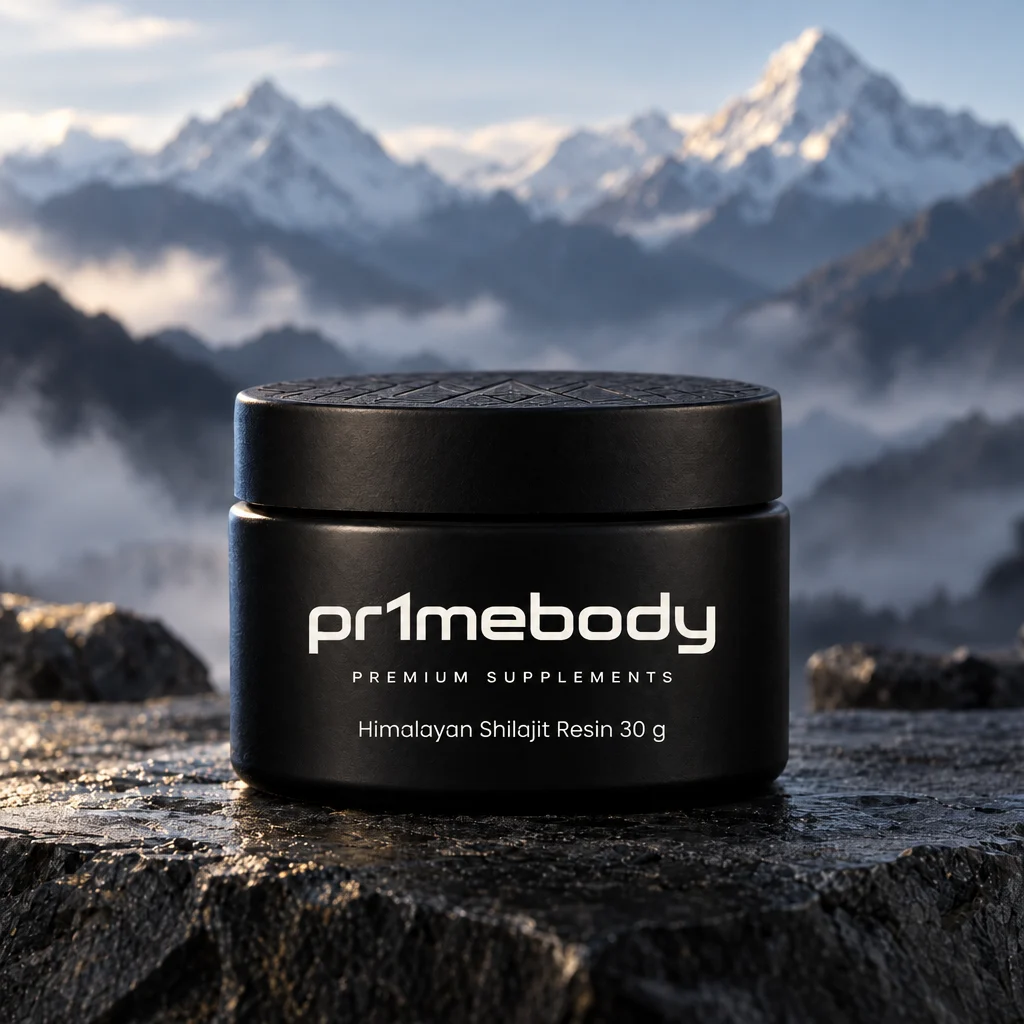
OUR SHILAJIT RESIN
Himalayan shilajit resin, 30 g pot
A shilajit resin food supplement in a 30 g pot. We publish no batch report for it on this site, and our guides explain what to ask any seller.
- 30 g resin pot
- Packs of 1, 3, 5 or 10 pots
- Follow the directions printed on the pot
From
$31
1 pot
A first pot to try.
$31
3 pots
$20.67 per pot
Buy 2, get 1 free
$62
−33%
5 pots
$18.60 per pot
Buy 3, get 2 free
$93
−40%
Best value
10 pots
$15.50 per pot
Buy 5, get 5 free
$155
−50%
See the full product page · Read first: what is shilajit
Prices in US dollars as of 12 Oct 2026. Free tracked shipping and a 30-day money-back guarantee. Checkout opens on satiovex.com, the store run by Xinop LLC, which also sells pr1mebody products; the item may appear there under the Satiovex name.
Traditional use versus evidence: what do the reviews say?
Traditional use and proof are different things. The 2011 Journal of Ethnopharmacology review found shilajit in many classical formulations but said it lacked systematic scientific documentation, and called one commonly cited immune-related activity unproven.
A 2014 Phytotherapy Research review took a more favourable view of safety, noting that safety was documented in animal and human studies, but it also said relatively few well-controlled human studies exist and that standardised products are needed. Reading both together, the fair summary is: interesting, under-studied, variable.
Cleveland Clinic goes further on strength of evidence. It calls the supporting studies mostly small, flawed, or done in test tubes and animals, and says human evidence is lacking for several popular claims.
Source
What it says
What it does not say
Source
Review of traditional use (2011)
What it says
Long history of use; bioactivity lacks substantial evidence
What it does not say
That any benefit is proven
Source
Safety and efficacy review (2014)
What it says
Safety documented in animal and human studies; few controlled human trials; standardised products needed
What it does not say
That your pot is standardised
Source
Cleveland Clinic (2025)
What it says
Evidence is weak; most studies small or not in humans
What it does not say
A safe dose
Source
Heavy metals review (2024)
What it says
Most reported metal levels were under WHO/FDA herbal limits; a few studies were over; use without knowing levels is not safe
What it does not say
That every product has been tested
That is why we do not make performance or wellness promises on this site. For the full picture, the sources at the bottom of the page are the place to start.
SHILAJIT
Cleveland Clinic notes shilajit is sold as liquids, powders, gummies and pills, sometimes mixed with other ingredients.
How does resin compare with capsules and gummies?
Cleveland Clinic notes shilajit is sold as liquids, powders, gummies and pills, sometimes mixed with other ingredients. The pr1mebody product is a resin in a 30 g pot.
One sourced comparison exists. In 2024 ConsumerLab bought eight shilajit products, including resins, analysed them, and found fulvic acid ranged from about 6.9 mg to 2,206 mg per serving. It reported that resins contained far less fulvic acid than the extracts used in capsules and pills, and that fulvic acid amounts are typically not printed on labels.
Form
What to check on the label
What sources say
Form
Resin (pot)
What to check on the label
Serving amount, ingredient list, lot and best-before date
What sources say
ConsumerLab found resins had far less fulvic acid than capsule extracts in its test
Form
Capsule or tablet
What to check on the label
Extract ratio, what else is inside
What sources say
Fulvic acid varied enormously between products
Form
Gummy
What to check on the label
Amount of shilajit per gummy, added ingredients
What sources say
Cleveland Clinic notes products may be mixed with other ingredients
Form
Liquid or powder
What to check on the label
Serving size and how it is measured
What sources say
No sourced comparison found
We are not saying one form wins. We are saying the number printed on the label, and a reason to trust it, matter more than the form. Our comparison of the three formats goes through dose visibility, label reading and price per serving.
The biggest quality question: heavy metals and sourcing
This is the part many sellers skip, and it matters more to a buyer than any legend about the material. Raw shilajit comes from mineral-rich rock, and metals come with minerals. Cleveland Clinic lists aluminium, arsenic, cadmium, chromium, mercury, thallium and lead among possible contaminants, and cites a 2025 study in which some supplements had higher thallium than raw shilajit.
The 2024 review in Biological Trace Element Research is more balanced. It found that most reported metal levels were below the limits it cites from WHO and the US FDA for herbal drugs, but that a few studies reported levels over those limits, and it concluded that using shilajit without knowing permissible levels is not safe.
ConsumerLab found lead, cadmium, arsenic and mercury below levels of concern in its eight products, assuming one dose a day. That is reassuring about those products on the day they were bought. It is not a statement about every pot of every brand.
Where we stand on our own pot
No batch report is published on this site, and we make no testing or certification claim. We will not call a pot "tested" without a document you can read. If a certificate of analysis for a specific lot is what you need before buying, ask through our contact page and decide with that answer in hand.
Cleveland Clinic advises choosing brands with independent third-party testing and a certificate of analysis. That is sensible advice for any shilajit. Hold every seller, including us, to it.
A label checklist: what a good pot should show
Before you buy any resin, run this list. It answers a practical version of what is shilajit: what exactly is in this pot? It is built from the gaps the sources above point to, and from the buying guide on the product listing.
- Serving instructions. A stated amount and how often. Cleveland Clinic gives no dose and says safe dosage is hard to set because composition varies by batch, so the pot must tell you.
- A full ingredient list. Is it shilajit alone, or are other ingredients added?
- Lot number and best-before date. Without them you cannot ask a seller about a specific batch.
- Origin wording. A country written plainly is a statement by the seller. A mountain range in a product name is only a name.
- A document, not an adjective. If a brand says tested, ask which lab, which lot and whether you can read the report.
- Warnings. Adults only, and a line telling people who are pregnant, breastfeeding or on medication to ask a professional first.
- A way to reach a human. Name, address and email on the product page.
The product page for our pot gives the 30 g size, pack options of 1, 3, 5 or 10 pots, and the instruction to follow the directions printed on the pot and not exceed the recommended serving. It does not show a serving amount or ingredient list in its text, so read the pot itself and use the checklist above on it.
SHILAJIT
Search suggestions around shilajit are full of questions about hormones, stamina and performance.
The claims you will see online, and why we do not repeat them
Search suggestions around shilajit are full of questions about hormones, stamina and performance. We understand why people ask, but we make no such claims, and the sources do not let us.
Cleveland Clinic says older, small studies suggest possible effects in some areas and that human evidence is lacking in others.
- It is not a medicine, and it does not treat any condition.
- It is not a single standardised ingredient. Fulvic acid amounts in the ConsumerLab test differed by a factor of hundreds.
- It is not proven by a mountain name or a nice jar. Ask for the paperwork.
- It is not for everyone. Several groups should ask a professional before use.
If you remember one thing from this guide, make it this: the honest answer to most questions is "it depends on the batch, and the evidence is limited".
Who is this guide for?
Adults who are curious, who have seen shilajit mentioned and want to understand it before spending money. If you are pregnant, breastfeeding, on medication or managing a health condition, treat this page as background and talk to a doctor or pharmacist first.
It is written by an editorial team that sells a shilajit resin, so you should weigh it accordingly. We have tried to cite everything checkable and to say plainly what we could not find. Our editorial policy explains how pages are written and corrected.
Who should ask a doctor first?
Supplements are not medicines, and shilajit is no exception. The US FDA says it is not authorised to approve dietary supplements for safety and effectiveness before they are marketed, and advises talking to a doctor or pharmacist before using one.
Cleveland Clinic lists people who should avoid shilajit or check with a provider first: anyone pregnant, breastfeeding or trying to conceive; people with heart disease, blood pressure problems, clotting or bleeding disorders, or on blood thinners; people with diabetes, or liver or kidney disease; people with overactive immune conditions; people with hemochromatosis; and children.
The full detail, including reported side effects, sits on our dedicated page: shilajit resin side effects.
Novel-food status in the EU: what one official document says
One official document covers this. A European Commission consultation request on mumijo, with Germany as the recipient member state, concludes that the product is not novel only when used as or in food supplements, and is novel when used in foods other than food supplements.
The document also says the submitted evidence did not show significant consumption in the EU before 15 May 1997, but that Czechia stated mumijo was used there in food supplements before that date. The PDF we read is dated September 2020, so check the current position before relying on it; the Commission's catalogue entry is summarised in our safety guide. None of this says anything about countries outside the EU.
In practice, under EU rules: food-supplement use is the one category that document treats as not novel. Anything labelled as an ordinary food, drink or ingredient is a different question.
Using a resin: start with the label
If you already know the basics and only need usage, the practical detail is on its own page so this guide stays readable. In short: follow the directions printed on the pot, do not exceed the recommended serving, use a clean dry utensil, close the lid tightly and keep the pot away from heat and direct sunlight.
For the step-by-step version and an honest list of what is still unknown, read how to take shilajit resin.
How to take shilajit resin
Label-first steps, and what no source can tell you.
Read the guide →
Resin, capsules or gummies?
How the formats differ in dose visibility, labels and price per serving.
Read the guide →
The shop
Every pr1mebody product in one place, with the label facts we can verify.
Go to the shop →
Questions people ask about shilajit
What is shilajit?
A dark, sticky, mineral-rich substance that forms in mountain rock over long periods, described by Cleveland Clinic as made from decomposed plants in rock crevices. The European Commission says it is not uniquely defined in origin or composition.
How is resin different from other forms of shilajit?
Resin is the semi-solid form sold in a pot. Our pot is 30 g. Other forms include capsules, powders, liquids and gummies.
Is there evidence that shilajit works?
Traditional medicine uses it widely, but a 2011 review found its bioactivity lacks substantial evidence, and Cleveland Clinic calls the evidence weak. We do not claim it is good for anything.
Is shilajit resin safe?
It depends on the product and the person. Contamination with metals is the main quality concern, and several groups should ask a professional first. See our side effects guide. No supplement is risk-free.
Is there a published lab report for shilajit resin?
Not on this site. No batch report is published on this site, and we make no testing claim for our pot. Ask for a certificate of analysis for any lot you are considering.
How much shilajit resin should I take?
Follow the directions printed on the pot and do not exceed the recommended serving. Cleveland Clinic gives no dose because composition varies by batch.
Is shilajit approved as a medicine?
No. It is sold as a food supplement. The FDA does not approve supplements for safety and effectiveness before sale.
Is shilajit a novel food in the EU?
A European Commission consultation document says mumijo is not novel when used in food supplements and is novel in other foods. Check the current catalogue entry.
Ready to look at the pot yourself?
The Himalayan Shilajit Resin comes in a 30 g pot, in packs of 1, 3, 5 or 10 pots. Read the label first, then decide.
KEEP READING
Related reading on shilajit
How to Take Shilajit Resin
How to take shilajit resin: follow the printed directions and stay within the serving. We give no doses of our own and say who should ask a doctor first.
Read the guide →
Is Shilajit Resin Safe? Metals, Sourcing and Oversight
Is shilajit resin safe? A look at heavy metals, batch reports, what official EU and US pages say, and who should check with a doctor or pharmacist first.
Read the guide →
Shilajit Resin vs Capsules vs Gummies
Shilajit resin vs capsules vs gummies: how dose visibility, label reading, price per serving and storage differ. No format is claimed to work better.
Read the guide →
Product: Himalayan Shilajit Resin, 30 g Pot
Himalayan shilajit resin in a 30 g pot: what the label states and leaves out, who should skip it, and the quality questions to ask any seller first.
See the product →
Sources
How we wrote this: see our editorial policy and about page. We read the sources listed above; for the three PubMed reviews we read the abstracts, not the full papers. Claims we could not source were left out.